 Anti-Aging
 GHK-Cu: The Copper Peptide Behind the Anti-Aging Hype
What makes GHK-Cu one of the most interesting peptides in skin and healing research — mechanisms, dosing, topical vs injectable, and practical tips.
GHK-Cu might be the most underrated peptide in the entire research space. While BPC-157 and semaglutide grab headlines, this tiny copper-binding tripeptide has quietly built one of the most impressive resumes in regenerative science — over 4,000 genes influenced, decades of published research, and effects that span from wound healing to hair growth to wrinkle reduction.
What makes GHK-Cu particularly compelling is the sheer breadth of what this molecule does. It’s not a one-trick compound. So let’s break down what makes it tick, how people use it, and whether the hype is actually justified.
All information in this article is for educational and research purposes only. GHK-Cu is a research peptide and is not approved by the FDA for human use. This is not medical advice.
What Is GHK-Cu?
GHK-Cu (glycyl-L-histidyl-L-lysine copper) is a naturally occurring tripeptide — just three amino acids bound to a copper ion. Your body already makes it. It’s found in human plasma, saliva, and urine, and it plays a role in tissue remodeling and wound repair throughout your life.
Here’s the catch: GHK-Cu levels peak around age 20, then drop steadily. By age 60, plasma concentrations are roughly one-third of peak levels.
That decline lines up uncomfortably well with the visible signs of aging — thinner skin, slower healing, less collagen turnover, weaker antioxidant defenses. Whether that’s correlation or causation is still being studied, but the research so far is pretty compelling.
Why Researchers Are Excited About GHK-Cu
Most peptides target a specific receptor or pathway. GHK-Cu is different. It acts as a broad gene expression modulator, essentially flipping switches across thousands of genes at once.
A landmark 2010 study by Pickart and colleagues used the Broad Institute’s Connectivity Map to show that GHK-Cu influences the expression of over 4,000 human genes — roughly 6% of the entire genome. And the direction of those changes is what matters: it tends to push gene expression patterns toward a younger, healthier state.
Specifically, GHK-Cu upregulates genes associated with:
- Collagen synthesis (types I, III, and V) — the structural proteins that keep skin firm
- Elastin production — what gives skin its snap-back quality
- Glycosaminoglycans (GAGs) — including hyaluronic acid, the moisture-holding molecules in your skin
- Antioxidant enzymes — superoxide dismutase (SOD), glutathione, and others that neutralize free radicals
- Stem cell markers — genes associated with tissue regeneration capacity
And it downregulates genes linked to inflammation, fibrinogen production, and tissue destruction.
That’s a pretty unusual profile for a molecule made of just three amino acids and a metal ion.
The Wound Healing Connection
Before GHK-Cu became an anti-aging darling, it was studied primarily for wound healing — and this is where some of the most solid evidence lives.
In animal models, GHK-Cu has been shown to accelerate wound closure, increase angiogenesis (new blood vessel formation), and improve the quality of healed tissue. It doesn’t just make wounds close faster; it makes the resulting tissue look more like the original rather than scar tissue.
This happens through a few mechanisms working together. The copper ion itself is essential for enzymes like lysyl oxidase, which cross-links collagen and elastin fibers. The GHK tripeptide portion attracts immune and repair cells to the wound site. And the gene expression changes create an environment that favors clean, organized tissue remodeling over chaotic scar formation.
For researchers working on tissue repair protocols, this makes GHK-Cu a natural complement to peptides like BPC-157 and TB-500. More on that below.
Topical vs. Injectable: Two Very Different Approaches
This is where things get interesting (and where I see the most confusion). GHK-Cu is used in two fundamentally different ways, and they don’t produce the same results.
Topical Application
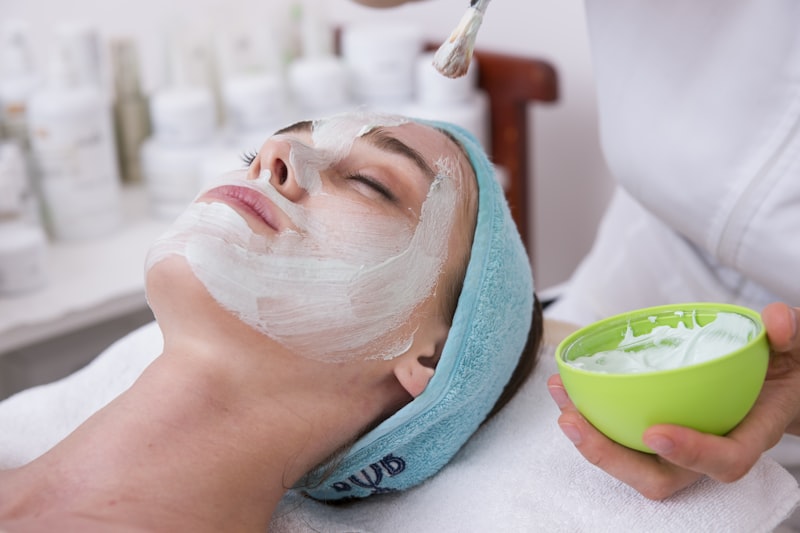
GHK-Cu has been a staple in high-end skincare for years. You’ll find it in serums and creams, typically at concentrations between 0.1% and 1%. The topical research is actually quite good — multiple controlled trials have shown improvements in skin thickness, elasticity, clarity, and wrinkle depth with consistent topical use.
But topical GHK-Cu stays local. It penetrates the upper layers of skin and works on the cells it directly contacts. That’s great for facial skin quality, but it’s not doing anything systemic.
Subcutaneous Injection
Injectable GHK-Cu goes systemic. When injected subcutaneously, it enters circulation and can influence tissue throughout the body — not just the skin at the injection site. This is the route researchers use when they’re interested in whole-body effects: organ protection, systemic antioxidant support, and broad anti-aging gene modulation.
The typical research dosing for injectable GHK-Cu is 1-2 mg per day, administered subcutaneously. Some protocols use 1 mg daily for general anti-aging research, while higher doses (2 mg/day) are used in tissue repair contexts.
So which is better? Depends entirely on your research goals. Want to study facial skin improvement? Topical is well-validated and simpler. Want to investigate systemic gene expression changes? Injectable is the only way to get there.
And honestly? Some researchers use both simultaneously — injectable for systemic effects and a topical serum for targeted facial application. There’s no conflict between the two routes.
Stacking: The Glow Stack and Beyond
GHK-Cu plays well with others. Its mechanisms are complementary to several popular research peptides, and a few specific stacks have become well-established in the community.
The Glow Stack: BPC-157 + TB-500 + GHK-Cu
This is probably the most popular GHK-Cu combination. You take the tissue repair powerhouse of BPC-157 and TB-500 (sometimes called the “Wolverine Stack”) and add GHK-Cu for its skin rejuvenation and collagen-boosting properties.
| Peptide | Role | Typical Dose |
|---|---|---|
| BPC-157 | Deep tissue repair, angiogenesis | 250-500 mcg/day |
| TB-500 | Cell migration, systemic anti-inflammatory | 2-5 mg twice/week (loading), 2 mg/week (maintenance) |
| GHK-Cu | Collagen synthesis, skin remodeling, antioxidant support | 1-2 mg/day |
The idea is straightforward: BPC-157 and TB-500 handle the heavy lifting on structural repair, while GHK-Cu brings the skin quality and surface-level rejuvenation. Protocols running this stack for 6-8 weeks target skin-related endpoints including collagen density, texture, and tissue remodeling markers — hence the name.
For a full breakdown of how to structure multi-peptide protocols, check out our peptide stacking guide.
The Anti-Aging Stack: GHK-Cu + NAD+
This one targets aging from two completely different angles.
GHK-Cu works on the structural side — collagen, elastin, extracellular matrix remodeling, and antioxidant enzyme production. NAD+ (or its precursors like NMN) works on the metabolic side — mitochondrial function, sirtuin activation, and DNA repair.
| Compound | Role | Typical Dose |
|---|---|---|
| GHK-Cu | Gene expression modulation, tissue remodeling | 1-2 mg/day (SubQ) |
| NAD+ / NMN | Mitochondrial energy, sirtuin activation, DNA repair | 50-100 mg IV or 100-250 mg/day SubQ/sublingual |
Together, you’re addressing both the architecture of tissues (are the structural proteins intact?) and the energy supply of cells (do mitochondria have what they need to function?). It’s the kind of two-pronged approach that makes mechanistic sense, even if human trial data on the combination is still limited.
Protocols typically run 4-6 weeks per cycle.
Reconstitution and Dosing
GHK-Cu comes as a lyophilized powder, just like most research peptides. Reconstitution follows the standard process — add bacteriostatic water, swirl gently, refrigerate.
For a 10 mg vial reconstituted with 2 mL of BAC water, you get a concentration of 5 mg/mL. A 1 mg dose would be 0.2 mL (20 units on an insulin syringe). Simple math, but if you want to double-check your numbers, use our peptide reconstitution calculator.
One thing to know about GHK-Cu specifically: the solution may have a slight blue-green tint due to the copper ion. That’s normal. If it’s cloudy or has floating particles, that’s a different story — discard it.
For the full step-by-step on reconstituting any peptide, see our reconstitution guide.
Storage
Same rules as any reconstituted peptide, with one addition:
- Lyophilized (powder): Store at -20C (freezer) for long-term, or 2-8C (fridge) for a few months. Stable for 24+ months when stored properly.
- Reconstituted: Refrigerate at 2-8C. Use within 28-30 days. Don’t freeze reconstituted solution.
- Copper sensitivity: GHK-Cu can be slightly more sensitive to light degradation than non-metallopeptides. Keep it in the original dark vial or wrap in foil.
For the complete rundown on keeping peptides potent, read our peptide storage and stability guide.
Where to Buy GHK-Cu
Quality matters with any peptide, but it matters especially with GHK-Cu because the copper binding has to be intact. A poorly synthesized or degraded product might have the GHK tripeptide but insufficient copper complexation — and that copper ion is doing a lot of the heavy lifting.
Look for suppliers that provide:
- Third-party COA (Certificate of Analysis) showing 98%+ purity via HPLC
- Proper copper content verification
- Sealed, light-protected vials
- Consistent positive reviews from the research community
Peptide Restore is a well-regarded source for research-grade GHK-Cu. Their products ship with full COAs and third-party testing, and they carry both individual GHK-Cu vials and the blend formulations for stacking.
Shop at Peptide Restore — 5% off
Frequently Asked Questions
What’s the difference between GHK-Cu and regular copper supplements?
Completely different. Copper supplements (like copper gluconate or copper citrate) provide free copper ions for general metabolic use. GHK-Cu is a specific tripeptide-copper complex that triggers gene expression changes through its own distinct mechanisms. Taking a copper pill won’t replicate what GHK-Cu does. The peptide portion is critical for the molecule’s biological activity.
Can I use topical GHK-Cu and injectable at the same time?
Yes. They work through complementary routes — topical for localized skin effects, injectable for systemic distribution. Many researchers use both simultaneously without any reported issues. The doses don’t meaningfully overlap since topical absorption into systemic circulation is minimal.
How long before I’d expect to see effects in a research protocol?
Skin-related changes in research models typically start appearing around weeks 2-4 with daily use. Full collagen remodeling effects take longer — closer to 8-12 weeks. Wound healing effects in animal studies show up much faster, often within days.
Does GHK-Cu need to be injected near the area of interest?
For injectable use, no. Subcutaneous injection anywhere (common sites are the abdomen and thigh) allows systemic distribution. The peptide doesn’t need to be injected at the specific site you’re studying, unlike some localized injection protocols used with BPC-157.
Is GHK-Cu safe to combine with BPC-157?
In research settings, the BPC-157 + GHK-Cu combination (with or without TB-500) is one of the most widely used stacks. The mechanisms don’t conflict — BPC-157 works primarily through nitric oxide and growth factor pathways, while GHK-Cu operates through gene expression modulation and copper-dependent enzyme activation. See our BPC-157 guide for more on that peptide’s profile.
How should I store reconstituted GHK-Cu?
Refrigerate at 2-8C and use within 28-30 days. The copper complex can be slightly more light-sensitive than some other peptides, so keeping the vial away from direct light is a good practice. Always use bacteriostatic water for reconstitution, and maintain sterile technique when drawing doses.
Disclaimer: This article is provided for educational and informational purposes only. GHK-Cu is a research peptide and is not intended for human consumption or therapeutic use. The information presented does not constitute medical advice. Always consult with a qualified professional before beginning any research protocol. All research should be conducted in compliance with applicable laws and institutional guidelines.
Ready to start your research? Shop at Peptide Restore — 5% off
Get peptide guides & calculator updates
Join the list. No spam — just research breakdowns and tool updates.
Ready to get started?
Use our free calculator to get exact dosing for your research.