 Sleep & Recovery
 DSIP: The Sleep Peptide That's Getting Researchers' Attention
What the research says about DSIP (Delta Sleep-Inducing Peptide) — dosing, timing, reconstitution, and how it compares to other sleep peptides.
Most peptide conversations revolve around tissue repair or growth hormone. But there’s a quieter corner of peptide research that’s been picking up momentum, and it’s focused on something we all need more of: better sleep.
DSIP — Delta Sleep-Inducing Peptide — has been around since 1977, which makes it ancient by peptide research standards. And yet, it’s only recently started getting the attention it probably deserved decades ago. Here’s what we actually know about it.
All information in this article is for educational and research purposes only. DSIP is a research peptide and is not approved by the FDA for human use. Nothing here constitutes medical advice.
What Is DSIP?
DSIP is a nonapeptide, meaning it’s built from just nine amino acids (Trp-Ala-Gly-Gly-Asp-Ala-Ser-Gly-Glu). It was first isolated from the cerebral venous blood of rabbits during induced sleep by a Swiss research group led by Schoenenberger and Monnier. They noticed that when this peptide was administered to other rabbits, it promoted delta wave sleep — the deepest, most restorative stage of the sleep cycle.
That discovery alone was remarkable. But what’s made DSIP more interesting over time is that it doesn’t just knock you out. It appears to modulate sleep architecture — the structure and quality of sleep stages — rather than simply acting as a sedative. That’s a fundamentally different approach from almost every pharmaceutical sleep aid on the market.
How DSIP Works
Here’s the honest truth: DSIP’s exact mechanism of action isn’t fully mapped out. It’s one of those peptides where the observed effects are well-documented but the underlying pathways are still being pieced together. That said, here’s what the research has established so far.
Sleep Architecture Modulation
DSIP doesn’t just increase total sleep time. It specifically promotes slow-wave sleep (SWS) — the deep sleep stage characterized by delta brain waves. This is the phase where the body does most of its physical repair, where growth hormone secretion peaks, and where memory consolidation occurs. This is the most consistently replicated finding across DSIP studies.
So why does that matter? Sleep quality, not just total duration, is the critical variable. Insufficient deep sleep is associated with poor recovery even after adequate time in bed. DSIP research focuses on this specific aspect of sleep architecture.
Cortisol and Stress Response
This one’s interesting. DSIP has demonstrated an ability to modulate cortisol levels, particularly in stress models. Several studies have shown it reduces ACTH (adrenocorticotropic hormone) secretion and normalizes cortisol rhythms that have been disrupted by chronic stress.
Elevated cortisol is one of the most common factors in sleep disturbances — stress hormones remain elevated when they should be declining. DSIP’s observed modulation of the HPA axis in research models is relevant to this pathway.
Pain Perception
There’s a smaller body of research suggesting DSIP has analgesic properties — it may reduce pain perception. Some researchers have theorized this is secondary to improved sleep quality (since poor sleep amplifies pain sensitivity), while others believe DSIP has direct effects on opioid receptor systems. The data here is less definitive, but it’s an active area of investigation.
LH and Hormonal Effects
A few studies have noted that DSIP influences luteinizing hormone (LH) release, which connects it to broader hormonal regulation. This is still early-stage research, but it hints at DSIP having effects beyond just sleep — potentially touching on stress resilience and endocrine function more broadly.
How DSIP Differs from Other Sleep Approaches
Let me be direct: DSIP is not melatonin, and it’s not a sleeping pill. Understanding the differences matters.
Melatonin is a hormone that signals to your body that it’s time to sleep. It’s a circadian rhythm cue, not a sleep quality enhancer. It helps you fall asleep (maybe), but it doesn’t do much for the depth or architecture of your sleep. And at the doses most people take (3-10 mg), it’s way above physiological levels, which can cause grogginess and disrupt your natural melatonin production over time.
Pharmaceutical sleep aids (benzodiazepines, Z-drugs like zolpidem) work by enhancing GABA activity, essentially forcing the brain into a sedated state. They increase total sleep time but actually suppress deep sleep and REM — the exact stages you need most. They also carry dependency risks.
DSIP appears to work by modulating the brain’s own sleep regulation systems rather than overriding them. It promotes delta wave sleep specifically, doesn’t seem to cause dependency in the published research, and doesn’t leave you foggy the next morning (one of the biggest complaints with conventional sleep aids). Published research has not identified dependency potential with DSIP, and next-day cognitive impairment has not been reported — distinguishing it from many conventional sleep aids in research comparisons. Rather than sedation, DSIP appears to modulate the brain’s endogenous sleep regulation systems.
Dosing
DSIP dosing is measured in micrograms, not milligrams — it’s active at much lower amounts than peptides like TB-500 or BPC-157.
| Parameter | Value |
|---|---|
| Standard dose | 100-300 mcg |
| Timing | 30-60 minutes before bed |
| Route | Subcutaneous injection |
| Frequency | Daily or 5 days on / 2 days off |
| Protocol length | 2-4 weeks |
Most researchers start at 100 mcg and work up to 200-300 mcg based on the response observed in their model. The 30-60 minute pre-bed timing window aligns with the peptide’s onset of action — it doesn’t work instantly like a sedative. You’re giving it time to start modulating the sleep systems before sleep onset.
Some researchers run DSIP daily, while others prefer a 5-on/2-off schedule to prevent potential desensitization. There’s no strong consensus on which approach is superior, so this is one of those areas where you’ll need to evaluate what works best for your specific protocol.
Need help figuring out the exact syringe volumes? Our Peptide Reconstitution Calculator makes it easy.
Reconstitution and Storage
This is where DSIP gets a bit tricky, and I want to be upfront about it.
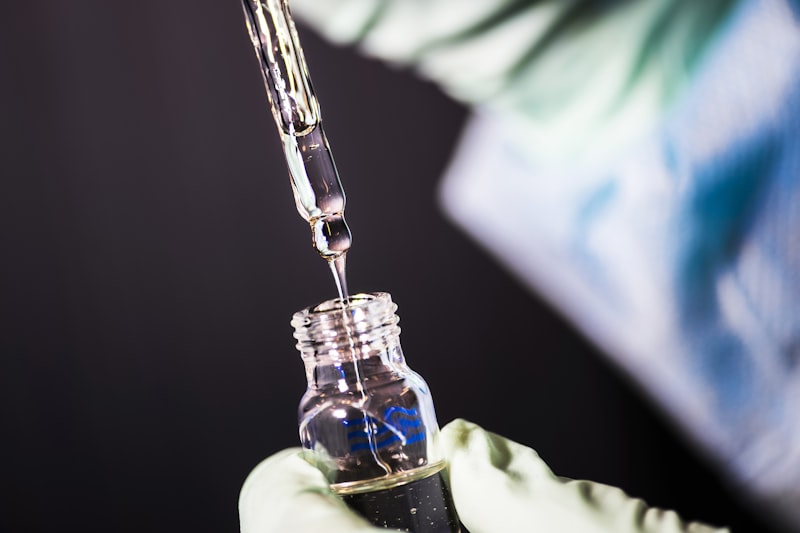
Reconstitution
The reconstitution process itself is standard:
- Wipe both vial tops (DSIP and BAC water) with alcohol swabs
- Draw your desired volume of bacteriostatic water — for a 2 mg vial, 1 mL of BAC water gives you 2,000 mcg/mL (so 0.05 mL = 100 mcg, 0.1 mL = 200 mcg)
- Add the water slowly against the vial wall
- Swirl gently until dissolved — never shake
- Label with date and concentration
For detailed reconstitution instructions, see our complete How to Reconstitute Peptides guide.
Quick concentration reference:
| Vial Size | BAC Water | Concentration | 100 mcg = | 200 mcg = |
|---|---|---|---|---|
| 2 mg | 1 mL | 2,000 mcg/mL | 0.05 mL (5 units) | 0.1 mL (10 units) |
| 2 mg | 2 mL | 1,000 mcg/mL | 0.1 mL (10 units) | 0.2 mL (20 units) |
| 5 mg | 2 mL | 2,500 mcg/mL | 0.04 mL (4 units) | 0.08 mL (8 units) |
Storage — The Catch
Here’s the thing: DSIP has a shorter shelf life than most peptides once reconstituted. We’re talking 1-2 weeks in the refrigerator, not the 4-6 weeks you’d get with something like BPC-157.
Why? DSIP is less stable in solution. The peptide degrades faster once it’s in liquid form, even with bacteriostatic water’s preservative properties. This means:
- Only reconstitute what you’ll use within 1-2 weeks
- Buy smaller vial sizes if available (2 mg is preferable to 5 mg for most protocols)
- Keep it refrigerated at 2-8°C at all times — never leave it out
- If the solution develops any cloudiness or particles, discard it immediately
Lyophilized (unreconstituted) DSIP is much more stable — store it in the freezer at -20°C and it’ll last for months. Just don’t reconstitute it until you’re ready to start using it.
For more on keeping peptides viable, see our Peptide Storage & Stability Guide.
What the Research Actually Shows
Let me give you a straight read on the evidence base here.
The strongest evidence for DSIP comes from its effects on sleep architecture. Multiple studies, going back to the original 1977 discovery and continuing through the 1990s and 2000s, have demonstrated its ability to promote delta wave sleep in animal models. Some small human studies have also shown improvements in sleep quality metrics, particularly in subjects with disrupted sleep patterns.
The cortisol modulation data is solid in animal models. DSIP consistently shows an ability to normalize stress-disrupted HPA (hypothalamic-pituitary-adrenal) axis function, which has implications beyond just sleep — it connects to stress resilience, mood regulation, and immune function.
The analgesic research is promising but less mature. A handful of studies suggest DSIP can reduce pain perception, particularly chronic pain, but the mechanisms aren’t fully understood and replication has been inconsistent.
Here’s what I think is the most underrated finding: DSIP has shown essentially no dependency potential in the research to date. Unlike benzodiazepines, Z-drugs, or even high-dose melatonin, there’s no evidence that DSIP causes tolerance, withdrawal, or rebound insomnia. For sleep research, that’s a genuinely big deal.
But let’s keep it real — the total volume of DSIP research is smaller than what you’d find for peptides like BPC-157 or Thymosin Beta-4. It’s a well-studied peptide by niche standards, but it hasn’t had the same level of investment that musculoskeletal repair peptides have attracted. The research is encouraging, not conclusive.
Where to Buy DSIP
Same rules apply here as with any research peptide: quality sourcing is non-negotiable. You want:
- Third-party COAs showing 98%+ purity via HPLC
- Properly sealed and light-protected vials
- Clear labeling with peptide weight and lot number
- A supplier with a real reputation in the research community
Peptide Restore carries research-grade DSIP with full third-party testing documentation. They’re one of the suppliers I’m comfortable recommending.
Shop at Peptide Restore — 5% off
Frequently Asked Questions
How long does it take for DSIP to work?
Most researchers report observing effects on sleep parameters within the first few days of administration, though the cortisol-modulating effects may take 1-2 weeks to become apparent. DSIP isn’t a sedative — it doesn’t produce immediate drowsiness. It works by modulating sleep systems over time, so give it a few sessions before drawing conclusions.
Can I stack DSIP with other peptides?
Yes. DSIP works through entirely different pathways than repair peptides like BPC-157 or TB-500, so there’s no conflict there. Some researchers include DSIP as the “recovery sleep” component of broader protocols, particularly those involving growth hormone secretagogues (since deep sleep is when GH secretion peaks naturally). See our Peptide Stacking Guide for combination strategies.
Is DSIP a sedative?
No. This is a common misconception. DSIP doesn’t sedate you or force sleep the way benzodiazepines or Z-drugs do. It modulates sleep architecture — specifically promoting deeper delta wave sleep. You still fall asleep naturally; the quality of that sleep is what changes.
Will DSIP make me groggy the next morning?
Based on the available research, DSIP does not appear to cause next-day grogginess or cognitive impairment — one of the most commonly reported issues with pharmaceutical sleep aids. In fact, improved deep sleep quality generally correlates with better next-day alertness and cognitive function.
How should I store reconstituted DSIP?
Refrigerate at 2-8°C and use within 1-2 weeks. DSIP degrades faster in solution than many other peptides, so only reconstitute what you’ll use in that timeframe. Unreconstituted vials can be stored in the freezer at -20°C for much longer. See our storage guide for full details.
Is DSIP safe?
In the published research, DSIP has demonstrated a favorable safety profile with no reported dependency potential, no significant adverse effects, and no evidence of tolerance development. However, as with all research peptides, human clinical data is limited and all research should be conducted under appropriate oversight and in compliance with applicable regulations.
Is DSIP legal?
DSIP is legal to purchase and possess for research purposes in the United States and most jurisdictions. It is sold as a research chemical and is not approved for human therapeutic use by the FDA. Researchers should verify compliance with all applicable laws in their jurisdiction.
Disclaimer: This article is provided for educational and informational purposes only. DSIP is a research peptide and is not intended for human consumption or therapeutic use. The information presented does not constitute medical advice. Always consult with a qualified professional before beginning any research protocol. All research should be conducted in compliance with applicable laws and institutional guidelines.
Looking to add DSIP to your research? Shop at Peptide Restore — Save 5%
Get peptide guides & calculator updates
Join the list. No spam — just research breakdowns and tool updates.
Ready to get started?
Use our free calculator to get exact dosing for your research.