 Getting Started
 Peptides 101: A No-BS Beginner's Guide to Peptide Research
New to peptides? Here's what they are, how they work, what equipment you need, and how to get started without wasting money or making rookie mistakes.
If you’ve been poking around forums, Reddit threads, or YouTube videos trying to figure out what peptides are and whether they’re worth researching, you’ve probably run into a wall of jargon, bro-science, and contradictory information. I get it. The space is confusing when you’re starting from zero.
This guide covers the foundational information every new peptide researcher needs. No fluff, no gatekeeping — just what you actually need to know to understand peptides, pick up the right equipment, avoid the rookie mistakes, and start a research protocol without lighting money on fire.
Everything in this article is for educational and research purposes only. Peptides are research chemicals and are not approved by the FDA for human use. This is not medical advice.
What Are Peptides, Actually?
Peptides are short chains of amino acids — typically between 2 and 50 amino acids linked together. That’s it. They’re not steroids. They’re not hormones (though some can influence hormone release). They’re not SARMs. They occupy their own category entirely.
Your body already makes hundreds of them. They act as signaling molecules, telling cells to do specific things — repair tissue, release growth hormone, modulate inflammation, produce collagen. The research peptides you’ll encounter are either synthetic copies of natural peptides or modified versions designed to be more stable or targeted.
The key thing that separates peptides from small-molecule drugs is specificity. Most peptides bind to one particular receptor or trigger one specific signaling cascade. That’s why they tend to have relatively clean side-effect profiles compared to broader-acting compounds. (Relatively. Nothing is side-effect-free.)
The Major Categories
Peptides get grouped by what they do. Here’s a quick map of the territory so you’re not lost when people throw names around:
Tissue Repair
BPC-157 and TB-500 are the heavy hitters here. BPC-157 is a gastric pentadecapeptide that promotes angiogenesis, tendon healing, and gut protection. TB-500 (Thymosin Beta-4) supports cell migration and reduces inflammation. Together they form the “Wolverine Stack” — the most popular combo in peptide research. Check out our BPC-157 guide for a deep dive.
Growth Hormone Secretagogues
CJC-1295 (a GHRH analog) and Ipamorelin (a ghrelin receptor agonist) are the standard pair. They work through different receptors to trigger a clean growth hormone pulse without spiking cortisol or prolactin. Other GH peptides exist (GHRP-2, GHRP-6, MK-677), but CJC/Ipa is where most beginners start because the side-effect profile is the mildest.
Metabolic
Semaglutide and tirzepatide are the big names — GLP-1 receptor agonists that reduce appetite and improve insulin sensitivity. You’ve probably heard of Ozempic and Mounjaro. Same active compounds, different context. These are the most mainstream peptides right now.
Anti-Aging and Skin
GHK-Cu is a copper-binding tripeptide that influences over 4,000 genes related to tissue remodeling, collagen production, and antioxidant defense. NAD+ and its precursors (NMN) support mitochondrial function and DNA repair. Together they form a popular anti-aging research stack.
Immune Modulation
Thymosin Alpha-1 (TA-1) is an immune-enhancing peptide that’s actually FDA-approved in over 30 countries (just not the US). It boosts T-cell maturation and natural killer cell activity.
Sleep
DSIP (Delta Sleep-Inducing Peptide) is exactly what it sounds like — a peptide studied for its effects on sleep architecture, particularly delta wave (deep) sleep.
That’s not an exhaustive list, but it covers the categories you’ll encounter 90% of the time.
Equipment You’ll Need
Before you open a single vial, you need the right supplies. Don’t skip any of these.
Bacteriostatic water (BAC water). This is sterile water with 0.9% benzyl alcohol added as a preservative. It’s what you use to reconstitute lyophilized peptides. Not sterile water (no preservative, single-use only), not saline, not distilled water from the grocery store. BAC water. This is non-negotiable.
Insulin syringes. Standard 1 mL (100 unit) or 0.5 mL (50 unit) insulin syringes with 29-31 gauge needles. These are the standard tools for measuring and administering doses in research protocols. The smaller gauge means a thinner needle, which is more comfortable but draws slower.
Alcohol swabs. You wipe the vial tops before every single needle insertion. Every time. This prevents bacterial contamination that can ruin your peptide solution — or worse.
A sharps container. For safe disposal of used needles. You can buy a proper one for a few bucks, or use a thick-walled plastic container (laundry detergent bottle works). Never throw loose needles in the trash.
Optional but recommended: A larger syringe (3 mL) for transferring BAC water during reconstitution. It’s faster than using an insulin syringe to move 2 mL of liquid.
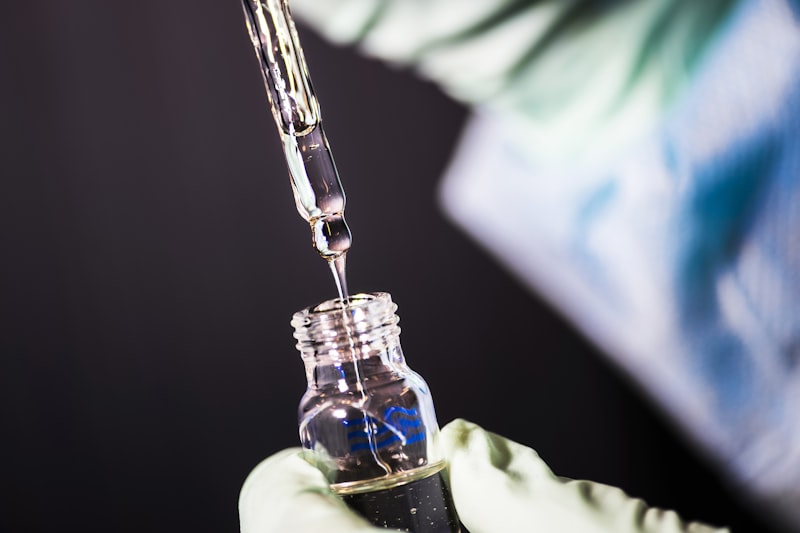
Total cost for a basic supply kit? Usually under $30. Don’t let the equipment be the thing that stops you.
Reconstitution: The 60-Second Version
Reconstitution is dissolving the freeze-dried peptide powder into BAC water so you can measure and draw accurate doses. Here’s the short version:
- Wipe both vial tops with alcohol swabs
- Draw your chosen volume of BAC water into a syringe
- Inject it slowly into the peptide vial — aim the stream against the glass wall, not directly onto the powder
- Swirl gently. Never shake.
- Wait until the solution is completely clear
- Label the vial with the date and concentration
- Refrigerate
The concentration you end up with depends on how much BAC water you add. For example: 5 mg of peptide + 2 mL of BAC water = 2,500 mcg/mL. Every 0.1 mL (10 units on an insulin syringe) gives you 250 mcg.
That’s the overview. For the full walkthrough with detailed instructions and common mistakes, read our complete reconstitution guide. And if math isn’t your thing, the peptide calculator will handle all the concentration and dosing arithmetic for you.
How to Read a Certificate of Analysis (COA)
This is something most beginners skip entirely, and it’s one of the most important skills you can develop. A COA is a lab report that tells you what’s actually in the vial. If a vendor doesn’t provide COAs, walk away. Period.
Here’s what to look for:
Purity percentage. This should be 98% or higher. It’s measured by HPLC (High-Performance Liquid Chromatography), which separates the peptide from any impurities and quantifies each. A purity of 99.1% means 99.1% of the material is the target peptide and 0.9% is other stuff (usually truncated sequences or synthesis byproducts).
Molecular weight. The COA should confirm the molecular weight matches the expected value for that peptide. If the peptide is BPC-157 (MW ~1419 Da) and the COA shows a molecular weight of 1600, something’s wrong.
Sequence verification. Good COAs include mass spectrometry data confirming the amino acid sequence matches the target peptide.
Endotoxin testing. Higher-quality vendors test for bacterial endotoxins, which can cause inflammatory reactions. Look for results below 0.25 EU/mg.
Appearance and solubility. Should note the peptide is a white to off-white lyophilized powder that dissolves in water.
You don’t need a chemistry degree to read a COA. You need to check three things: is the purity above 98%, does the molecular weight match, and did a third-party lab (not the manufacturer’s in-house lab) perform the testing?
Storage 101
Peptides are fragile molecules. Heat, light, moisture, and bacterial contamination will all degrade them. The rules are simple but strict:
Lyophilized (powder form): Freezer (-20C) for long-term storage, fridge (2-8C) for up to a few months. Properly stored lyophilized peptides can last 2+ years. Keep them in their original sealed vials away from light.
Reconstituted (in solution): Fridge only, 2-8C. Use within 28-30 days. Never freeze a reconstituted peptide — the freeze-thaw cycle can shatter the molecular structure. Always use BAC water (not sterile water) because the benzyl alcohol preservative inhibits bacterial growth in your multi-use vial.
Signs it’s gone bad: Cloudiness, floating particles, discoloration, or it’s been more than 30 days since reconstitution. When in doubt, toss it. A $30-60 vial isn’t worth the risk of using degraded material.
For a much deeper dive, our peptide storage and stability guide covers everything from travel storage to managing multiple reconstituted vials.
Common Beginner Mistakes
I’ve seen every one of these. Don’t be the person who learns the hard way.
Using sterile water instead of bacteriostatic water. Sterile water has no preservative. The moment you stick a needle through that rubber stopper and draw from it a second time, bacteria have a path in and nothing to stop them from multiplying. BAC water’s benzyl alcohol keeps your solution safe across multiple draws for weeks. Always use BAC water for multi-dose vials.
Shaking the vial after reconstitution. Peptides are long chains of amino acids held together by relatively weak bonds. Vigorous shaking creates shear forces that can denature (unfold) the peptide, destroying its biological activity. You just turned a $50 vial into expensive water. Swirl gently. That’s all it needs.
Getting the syringe math wrong. This trips people up constantly. On a 1 mL insulin syringe, 100 units = 1 mL. So 10 units = 0.1 mL. If your reconstituted concentration is 2,500 mcg/mL and you want 250 mcg, you draw to the 10-unit mark. It’s simple once you get it, but one decimal place error means you’re dosing 10x too much or too little. Use the calculator until the math is second nature.
Leaving reconstituted peptides at room temperature. Even an afternoon on the counter can start degrading some peptides. Put it back in the fridge immediately after drawing your dose. Every time.
Not wiping vial tops with alcohol. It takes three seconds. Skip it enough times and you’ll introduce bacteria into your solution. Then you get a cloudy vial and wasted money.
Buying from sketchy vendors. If the price seems too good to be true, it probably is. No COA? No third-party testing? A website that looks like it was built in 2003? Hard pass. You’re better off spending more from a reputable source than gambling on mystery powder.
Choosing Your First Peptide
So you know what peptides are, you have the equipment, and you understand the basics. Now what? A first peptide should be chosen based on the specific research interest. Here is a general framework:
If your interest is tissue repair or recovery: Start with BPC-157. It’s the most extensively studied peptide in the regenerative space, has a solid safety profile in animal research, and the dosing protocols are well-established. Our BPC-157 guide covers everything you need. If you want to go further, add TB-500 to form the Wolverine Stack — see the stacking guide.
If your interest is growth hormone research: The CJC-1295 + Ipamorelin stack is the standard starting point. Clean GH pulse, well-studied, predictable dosing.
If your interest is skin and anti-aging: GHK-Cu is the most researched option. Available as both injectable and topical, with strong published data on collagen synthesis and gene expression modulation.
If your interest is metabolic/weight management: Semaglutide is the most studied GLP-1 agonist. But understand that metabolic peptides are a different beast — they require careful titration and longer protocols.
Don’t try to run three peptides your first time out. Start with one (or one well-established stack of two). Learn the process. Get comfortable with reconstitution, dosing, and record-keeping. Then expand from there.
Where to Source Quality Peptides
This is arguably the most consequential decision you’ll make. The peptide itself can be perfect on paper, but if the actual product in the vial is underdosed, impure, or contaminated, your research is worthless.
Here’s what to look for in a supplier:
- Third-party COAs for every batch, not just a generic certificate
- HPLC purity testing showing 98% or higher
- Proper packaging — sealed vials, desiccants, light protection
- Clear labeling with peptide name, weight, lot number
- Responsive customer service (you’d be surprised how many vendors ghost you)
- Consistent positive reviews from the research community
I recommend Peptide Restore. They check every box above, ship with full third-party COAs, and carry the full range of popular research peptides — individual vials and blend formulations.
Shop at Peptide Restore — 5% off
Frequently Asked Questions
Are peptides legal?
In the United States and most other countries, peptides are legal to purchase and possess for research purposes. They’re classified as research chemicals, not controlled substances (with a few exceptions — check your local regulations). They are not approved for human therapeutic use by the FDA.
Are peptides the same as steroids?
No. Not even close. Steroids are synthetic derivatives of hormones (primarily testosterone) that bind to androgen receptors and directly alter hormonal signaling. Peptides are short amino acid chains that typically work through their own specific receptors and signaling pathways. Different chemistry, different mechanisms, different regulatory category.
Do peptides need to be injected?
Most research peptides are administered via subcutaneous injection because peptides are generally broken down by digestive enzymes if taken orally. There are exceptions — BPC-157 has shown oral stability in GI studies, and some peptides are available in nasal spray or topical formulations. But subcutaneous injection remains the standard route for most compounds.
How do I calculate my dose?
It’s a two-step process: first, reconstitute your peptide to a known concentration (peptide weight / BAC water volume = concentration). Then, calculate the volume needed for your target dose (target dose / concentration = injection volume). Or just plug the numbers into our peptide calculator and let it do the work.
Can I mix two peptides in the same syringe?
Many common combinations are chemically compatible and can be drawn into the same syringe — BPC-157 + TB-500 and CJC-1295 + Ipamorelin are the most common examples. Draw them right before injection rather than pre-mixing and storing. If you’re unsure about a specific combination, keep them in separate syringes until you’ve confirmed compatibility.
How long do research protocols typically last?
It varies by peptide and research goal. BPC-157 protocols commonly run 2-4 weeks. GH secretagogue protocols run 8-12 weeks. Anti-aging protocols can run 4-8 weeks per cycle. Most protocols include an off-cycle period afterward. Check the specific guidance for whichever peptide you’re researching.
What’s the most common beginner mistake?
Honestly? Overcomplicating it. People spend weeks reading about 15 different peptides, trying to design a five-compound stack before they’ve ever reconstituted a single vial. Pick one peptide that matches your research interest. Buy the supplies. Reconstitute it. Run a basic protocol. Learn by doing. You can always add complexity later.
Disclaimer: This article is provided for educational and informational purposes only. All peptides discussed are research chemicals intended for laboratory research use only. They are not approved for human consumption or therapeutic use by the FDA. The information presented does not constitute medical advice. Always consult with a qualified professional before beginning any research protocol. All research should be conducted in compliance with applicable laws and institutional guidelines.
Ready to get started? Shop at Peptide Restore — 5% off
Get peptide guides & calculator updates
Join the list. No spam — just research breakdowns and tool updates.
Ready to get started?
Use our free calculator to get exact dosing for your research.